Allergic contact dermatitis cause in Mexico: Symptoms, Causes & Treatment | aihealz
ICD variantAllergic contact dermatitis cause is a specific ICD-10 coded subtype of Allergic Contact Dermatitis. The clinical content below covers Allergic Contact Dermatitis in general.
DermatologymildICD-10 · L23.9
Allergic contact dermatitis cause.Care & specialists in Mexico
In Mexico, allergic contact dermatitis cause is managed by dermatologists. Allergic contact dermatitis is a delayed-type (Type IV) hypersensitivity reaction in which T cells primed against a specific chemical produce an itchy, vesicular rash 24-72 hours after re-exposure. It is the second most common form of contact dermatitis after the irritant subtype and accounts for roughly 20% of all occupational skin disease.
Allergic contact dermatitis — inflammatory response in the skin after re-exposure to a sensitizing allergen. · Credit: BruceBlaus / Wikimedia Commons (Blausen Medical 2014) · CC BY 3.0
aliases · Allergic Contact Dermatitis (contact allergy rash)· एलर्जिक संपर्क जिल्द की सूजन (Allergic Sampark Jild ki Soojan)· Sparshajanya Visha· Dermatite de contact allergique· reviewed May 12, 2026
EB
Reviewed by AIHealz Medical Editorial Board · DermatologyLast reviewed May 12, 2026
Allergic contact dermatitis (ICD-10: L23) is an eczematous skin reaction caused by a T-cell-mediated, delayed-type (Type IV) hypersensitivity response to a low-molecular-weight chemical that penetrates the stratum corneum and binds skin proteins to form an immunogenic hapten-protein complex. The condition develops in two stages. Sensitization occurs on first prolonged or repeated exposure: Langerhans cells and dermal dendritic cells process the hapten and migrate to regional lymph nodes, where they prime allergen-specific CD8+ and CD4+ effector and memory T cells. The elicitation phase begins on re-exposure — usually 24-72 hours later — when the memory T cells return to the skin, release interferon-γ, IL-17, and IL-4/IL-13, and recruit a cellular infiltrate that produces erythema, edema, papules, and vesicles at the contact site.
key facts
Prevalence
~20% of the general European population sensitized to at least one allergen (Alinaghi BJD 2019); ACD accounts for 20% of occupational skin disease in the US
Demographics
Women affected more than men (mainly through cosmetics, jewellery, hair products); pediatric incidence rising in parallel with adults
Avg. age
Sensitization can occur at any age; clinical disease peaks 20-65 years, with occupational cases concentrated in the first two decades of working life
Global cases
Chronic hand eczema (the dominant ACD presentation in adults) affects roughly 5-9% of European adults at any time (Apfelbacher BJD 2025)
Specialist
Dermatology
§ 02
How you might notice it
Urushiol-induced allergic contact dermatitis from poison ivy, 7 days after exposure — note the linear vesicular pattern from plant brush contact. · Credit: Nunyabb (English Wikipedia) / Wikimedia Commons · Public Domain
The key symptoms of Allergic contact dermatitis cause are: Intense itch over the contact area, typically beginning 24-72 hours after re-exposure to the allergen and peaking at day 3-4 — the cardinal feature distinguishing ACD from immediate contact urticaria., Erythematous papules and tiny clear vesicles that may coalesce into oozing, weeping plaques during the acute phase, often with overlying serous crust., Sharp geographic borders that match the area of allergen contact — a band around the wrist from a watchband, a rectangle on the abdomen from a nickel jeans stud, streaks on the forearm from a plant., Burning, stinging, or pain in heavily inflamed or fissured areas, especially on the hands, eyelids, lips, and perianal skin where the stratum corneum is thin., Lichenification — thickened, leathery skin with exaggerated skin markings — over chronically exposed and scratched sites such as the dorsal hands, eyelids, and feet., Hyperpigmentation or hypopigmentation after inflammation resolves, especially in skin of color, which can persist for months after the active dermatitis has cleared., Spread of the eruption beyond the original contact site over days (id reaction or autoeczematization), producing scattered papulovesicles on the trunk and limbs even where no allergen touched..
01Intense itch over the contact area, typically beginning 24-72 hours after re-exposure to the allergen and peaking at day 3-4 — the cardinal feature distinguishing ACD from immediate contact urticaria.
§ 03
How it’s diagnosed
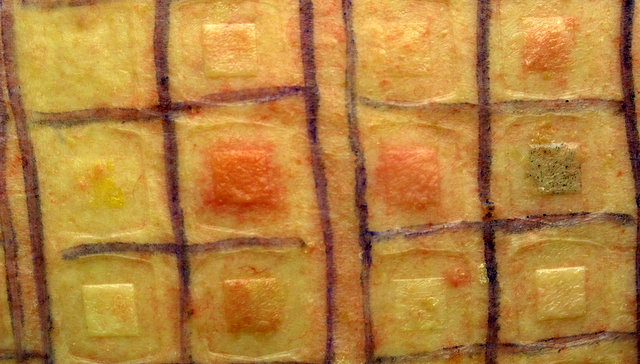
Strong (2+) positive patch-test reaction — erythema, edema and vesicles at the allergen chamber site, the diagnostic gold standard for allergic contact dermatitis. · Credit: Svineviken / Wikimedia Commons · CC0
diagnosis
Diagnosis of allergic contact dermatitis begins with a detailed exposure history aligned to the rash pattern: when did it start, what touched the skin, what improves it on weekends or holidays, what at-work versus at-home products are used. The decisive investigation is patch testing — the gold-standard diagnostic recommended by both the American Contact Dermatitis Society and the European Society of Contact Dermatitis. The technique applies standardized allergen-loaded chambers to the upper back for 48 hours, with readings at day 2, day 4 and (where logistics allow) day 7. The North American 80-allergen Core Series and the European Baseline Series each detect 70-80% of clinically relevant allergens; supplemental series (cosmetics, hairdressers, dental, plastics-and-glues, fragrance, plants) are added based on history. A positive reaction grades from doubtful (?+) through 1+ erythema and papules, 2+ vesicles, to 3+ bullous reactions; relevance to the current dermatitis must then be assessed by an experienced reader using the patient's exposures. Histology is not specific but can exclude mimickers in atypical cases — biopsy of acute ACD shows spongiosis and a perivascular lymphocytic infiltrate, similar to atopic dermatitis. Specific IgE and skin-prick tests have no role in classical ACD, since the disease is T-cell mediated rather than IgE mediated; they are reserved for suspected contact urticaria. The decisive differentials to keep in mind are irritant contact dermatitis (non-immunologic, more burning than itching, no sharp borders), atopic dermatitis (flexural, lifelong, atopic stigmata), nummular eczema (coin-shaped, no allergen pattern), seborrheic dermatitis (greasy scale on sebum-rich areas), psoriasis (well-demarcated plaques with silvery scale), and tinea (KOH-positive scale, central clearing). A negative comprehensive patch test in a true ACD-pattern eruption should prompt re-testing with expanded or work-specific series and review of patients' own products before concluding the disease is not allergic.
§ 04
Treatment & cost
medical treatments
✓Allergen avoidance plan with ingredient-list translation (ACDS CAMP, SkinSAFE)
✓Topical corticosteroids (hydrocortisone 1-2.5% face/folds; triamcinolone 0.1% body; clobetasol 0.05% short courses for lichenified plaques)
✓Topical calcineurin inhibitors (tacrolimus 0.1% ointment or 0.03% in children; pimecrolimus 1% cream)
✓Cool wet compresses with normal saline or aluminum acetate (Burow's solution)
§ 05
Causes & risk factors
known causes
Nickel (jewellery, jeans buttons, mobile phones, surgical implants)
The single most common contact allergen worldwide. Roughly 17-19% of women and 3% of men patch-tested in the North American Contact Dermatitis Group 2019-2020 series reacted to nickel sulfate. The EU Nickel Directive (1994, tightened 2009) has reduced rates in regulated products but exposure persists from imported and unregulated items.
Fragrance mix I and II, balsam of Peru, hydroperoxides of linalool and limonene
Fragrances are the leading cause of cosmetic ACD. Fragrance mix I detects roughly 8-12% of patch-tested patients in NACDG and European registries. Many marketed 'unscented' products still contain masking fragrances, which is why patch testing with the expanded series is needed to identify true culprits.
Methylisothiazolinone (MI) and methylchloroisothiazolinone (MCI)
Preservatives in liquid soaps, cosmetics, household cleaners, water-based paints, and industrial fluids. Reaction rates rose from 1.4% in 2009 to over 13% in some European clinics by 2014 (Uter JEADV 2020). EU and US cosmetic regulations have since tightened limits, but MI remains a top-5 allergen.
Topical antibiotics (neomycin, bacitracin)
Often applied to broken skin, dramatically raising sensitization risk. NACDG positivity rates: neomycin 7-9%, bacitracin 7-9%. Cross-reaction within the aminoglycoside class is common and can complicate later antibiotic choice.
p-Phenylenediamine (PPD) in permanent and semi-permanent hair dye and black henna tattoos
PPD is one of the most potent contact sensitizers and a leading cause of severe scalp, face, and neck dermatitis in adults. Black henna temporary tattoos contain extremely high PPD concentrations and can sensitize children within days; cross-reaction with sulfonamide antibiotics and benzocaine is well documented.
The dominant cause of glove-related occupational hand dermatitis in healthcare, food handling, and cleaning. Rubber accelerators are present in latex and synthetic gloves alike; switching to accelerator-free nitrile gloves resolves most cases.
§ 06
Living with it
01Choose nickel-free jewellery (stainless steel grade 316L, titanium, gold above 18 karat, platinum) and avoid prolonged contact with belt buckles, watchbacks, and mobile-phone metal frames if you are already sensitized
02Read INCI ingredient lists on cosmetics and personal-care products, and verify alternatives through ACDS CAMP or SkinSAFE before purchase if you carry a known allergy
03Switch to accelerator-free nitrile gloves and use cotton liners in wet-work occupations to break the rubber-accelerator and detergent-exposure cycle
04Avoid black henna temporary tattoos in children and travellers — PPD concentrations are 10-100 times those allowed in regulated hair dyes
05Test new leave-on cosmetics on a small area of the antecubital fossa for 2-3 days before applying to the face or eyelids
06Substitute petroleum jelly or simple bland emollients for over-the-counter triple-antibiotic creams on minor cuts — neomycin and bacitracin sensitization is a leading preventable cause of ACD
recommended foods
•Balanced diet appropriate for age — no specific food group eliminations without documented systemic contact allergy
§ 07
When to seek help
why see a dermatology
Refer to a dermatologist with patch-testing experience whenever the dermatitis is chronic, recurrent, occupationally disabling, fails first-line topical therapy after 4-6 weeks, or has an unusual distribution that suggests a contact pattern. Allergists are appropriate co-managers when contact urticaria or systemic allergy is also suspected, and occupational physicians should be involved early in work-related cases to address workplace exposures and disability paperwork. Patients with eyelid, facial, perianal, or genital ACD particularly benefit from early specialist input because of the diagnostic complexity and risk of treatment-induced atrophy in these sites.
01Chronic lichenified, fissured hand or foot dermatitis with significant occupational disability — preventable with early diagnosis and structured avoidance
02Post-inflammatory hyperpigmentation or hypopigmentation, particularly in skin of color, persisting for months after active disease resolves
03Bacterial superinfection (Staphylococcus aureus impetiginization or cellulitis) over excoriated or fissured skin
04Eczema herpeticum — disseminated herpes simplex virus infection of dermatitic skin, a dermatologic emergency requiring IV acyclovir
05Erythroderma — generalized exfoliative dermatitis, especially after systemic exposure to the allergen in a heavily sensitized patient
Acute allergic contact dermatitisSharply demarcated erythema, edema, vesicles, and oozing 24-72 hours after re-exposure to the allergen. Most often follows a clearly identifiable single high-dose contact such as poison ivy, hair dye, or a new cosmetic.
Subacute allergic contact dermatitisPersistent erythematous, scaly, papular plaques that develop over weeks of ongoing low-grade exposure. Typical of cosmetic, topical-medication, and metal allergies.
Chronic allergic contact dermatitisLichenified, fissured, hyperkeratotic plaques from continued exposure over months or years. Hands and feet are the dominant sites. Frequently mistaken for atopic dermatitis or psoriasis until patch testing is performed.
Systemic contact dermatitisGeneralized eczematous, dyshidrotic, or symmetric flexural eruption (baboon syndrome) after systemic exposure to an allergen in a pre-sensitized patient. Common with metals, balsam of Peru, antibiotics, and some plant-derived foods.
Photo-allergic contact dermatitisEczematous reaction limited to sun-exposed sites in patients sensitized to a photoallergen activated by UVA — sunscreens (oxybenzone), NSAID gels (ketoprofen), and some fragrances are the leading culprits.
Airborne allergic contact dermatitisEczematous reaction on exposed skin — face, eyelids, neck, V of the chest — from airborne allergens such as sesquiterpene lactones (Compositae plants), epoxy resins, or fragrance vapours. Easily mistaken for photo-dermatitis but spares the submental shadow.
Living with Allergic contact dermatitis cause
Timeline
An acute allergic contact dermatitis flare typically responds within days of allergen removal and topical corticosteroid initiation: visible redness drops within 3-5 days, itch within 5-10 days, and most flares clear within 2-4 weeks. Lichenified chronic plaques take longer — 4-12 weeks of consistent therapy plus avoidance. Post-inflammatory hyperpigmentation can persist for 2-6 months after the active dermatitis resolves, especially in skin of color. After successful patch-testing and confirmed avoidance, most patients see meaningful improvement within 1-3 months, and full re-equilibration of skin barrier and microbiome over 3-6 months. Re-exposure at any point can reproduce the original eruption within 24-72 hours.
Lifestyle
01Maintain a daily fragrance-free emollient routine to support the skin barrier — barrier breakdown amplifies allergen penetration even between flares
02Apply emollient immediately after washing hands and at every shift break in wet-work occupations; carry travel-size containers
03Wash new clothes before wearing and use fragrance-free, dye-free detergent; skip fabric softeners which often contain quaternary ammonium sensitizers
04Replace cosmetics, shampoos, and laundry products one at a time when starting a new avoidance plan so that any flare can be traced to a specific re-introduction
05Keep a flare diary noting products, occupational exposures, jewellery, and travel — patterns often emerge that identify overlooked allergens
06Address comorbid atopic dermatitis with daily emollients and proactive topical anti-inflammatory maintenance — a healthier barrier reduces the rate of new contact sensitization
Complementary approaches
Barrier creams and protective gloves with cotton linersFor occupational exposures that cannot be eliminated, double-glove protocols (cotton inner glove, accelerator-free nitrile outer glove) and pre-shift application of barrier creams measurably reduce flare rates in randomized occupational hand-eczema trials.
Patient education programmes and written eczema action plansStructured group education and individualized written avoidance plans reduce flare frequency by 40-50% across randomized trials in chronic hand dermatitis and pediatric contact eczema (Thyssen Contact Dermatitis 2022 guideline).
Habit-reversal training for chronic scratchingTargets the itch-scratch cycle in chronic lichenified disease. Small but reproducible improvements in symptom scores and quality of life when paired with active treatment.
Choosing a doctor
Look for a board-certified dermatologist who routinely performs patch testing with both the North American Core Series and supplemental series (cosmetics, hairdressers, dental, plastics-and-glues, fragrance, plants). Ask whether the clinic offers ROAT testing for ambiguous reactions and whether the dermatologist provides a written allergen-avoidance plan plus access to a product database such as the ACDS CAMP app. Continuity matters — allergen avoidance is a long-term skill set and a clinician who knows your trigger profile will out-perform episodic specialist visits.
Allergic contact dermatitis is not curable in the sense that the sensitization is lifelong, but the disease is fully controllable with strict allergen avoidance. Once the allergen is identified by patch testing and removed from daily exposure, most patients remain symptom-free indefinitely. Re-exposure at any point — even decades later — can reproduce the original dermatitis within 24-72 hours, which is why ongoing avoidance is the key to long-term control.
How do I know if it is allergic or irritant contact dermatitis?▾▴
Allergic contact dermatitis is itch-dominant, follows a 24-72 hour delay after re-exposure, requires prior sensitization, and produces sharply demarcated vesicular reactions. Irritant contact dermatitis is burning- or stinging-dominant, occurs in anyone given enough exposure without prior sensitization, has less sharply demarcated borders, and is patch-test negative. Both can coexist, so dermatology referral for patch testing is the only reliable way to tell them apart in chronic cases.
What is patch testing and what should I expect?▾▴
Patch testing is the diagnostic gold standard for ACD. Small chambers loaded with standardized allergens are taped to the upper back for 48 hours, then read by the dermatologist at days 2, 4, and 7. The procedure is painless, takes 30-60 minutes per visit, and identifies the offending allergen in roughly 70-80% of cases. Patients keep the area dry, avoid exercise and sun, and bring their own products to test.
What are the most common contact allergens?▾▴
The most common contact allergens worldwide are nickel (in jewellery and metal accessories), fragrance mix and balsam of Peru (in cosmetics and personal-care products), methylisothiazolinone (a preservative in liquid soaps and household cleaners), topical antibiotics neomycin and bacitracin, rubber accelerators (in gloves), p-phenylenediamine (in hair dye and black henna), and urushiol from poison ivy. The North American Contact Dermatitis Group publishes updated rankings every 2 years.
Can I develop a new allergy in adulthood?▾▴
Yes. Sensitization can occur at any age and often develops in adulthood after prolonged or repeated exposure to a new product or workplace chemical. Common adult-onset sensitizations include hair dye, cosmetic preservatives, rubber accelerators in gloves, and topical medications used on broken skin. Once sensitization is established it is essentially lifelong.
How long does an ACD rash last?▾▴
An acute flare typically resolves over 2-4 weeks once the allergen is removed and topical corticosteroid is started. Visible redness drops within 3-5 days, itch within 5-10 days, and full clearance follows over the next 2-3 weeks. Chronic lichenified plaques take longer — 4-12 weeks of consistent therapy plus avoidance. Continued exposure perpetuates the rash indefinitely.
Why does my eyelid get red after using new makeup?▾▴
Eyelid skin is thin and absorbent, so it often shows allergic contact dermatitis to cosmetics, nail products transferred by the fingers, and hair products that drip onto the face. Common eyelid culprits include preservatives (methylisothiazolinone), fragrances, gold, and nickel in eyelash curlers. Patch testing identifies the trigger and a dermatologist can recommend safe alternatives.
Is nickel allergy common?▾▴
Yes. Nickel is the single most common contact allergen worldwide. Roughly 17-19% of women and 3% of men patch-tested in the North American Contact Dermatitis Group 2019-2020 series reacted to nickel sulfate. Early ear piercing in childhood is the strongest risk factor, and once sensitization is established it persists for life.
Can poison ivy spread from person to person?▾▴
No. The rash itself is not contagious. The urushiol oil from poison ivy, oak, or sumac is the trigger and can persist on skin, clothing, tools, and pet fur for weeks — that residual oil can transfer to another person and produce a rash, but the existing rash cannot. Wash skin, clothes, and tools with soap and water to remove urushiol.
Are steroid creams safe for allergic contact dermatitis?▾▴
Yes, topical corticosteroids are safe and effective when used correctly. Match potency to the site (low on face and folds, mid on body, high for thick plaques), apply once or twice daily during a flare for 2-4 weeks, and taper. Long-term continuous high-potency use on the face causes atrophy and rosacea, so calcineurin inhibitors are preferred for facial and eyelid maintenance.
What should I do if I cannot avoid the allergen at work?▾▴
Discuss workplace adjustments with your dermatologist and occupational physician. Options include substituting the allergen-containing product, using accelerator-free nitrile gloves with cotton liners, applying barrier creams pre-shift, and adjusting tasks. Where avoidance is impossible, structured topical and systemic therapy plus formal occupational disability assessment may be needed.
Can children get allergic contact dermatitis?▾▴
Yes. About 25-30% of patch-tested children show clinically relevant contact allergies, most often to nickel, fragrances, preservatives, and topical antibiotics. Black henna temporary tattoos applied to children can cause severe p-phenylenediamine sensitization with lifelong consequences for hair-dye use. Patch testing is well tolerated from school age onward.
Does diet matter for allergic contact dermatitis?▾▴
For most patients, food does not drive ACD. A subset with proven systemic contact dermatitis to balsam of Peru or nickel may benefit from a targeted low-balsam or low-nickel diet under dietitian supervision when classic flare patterns are documented. Broad untested elimination diets cause nutritional gaps without reducing dermatitis.
What is the difference between allergic contact dermatitis and atopic dermatitis?▾▴
Atopic dermatitis is a lifelong, flexural, itchy condition that usually starts in infancy with personal or family atopy. Allergic contact dermatitis often starts in adulthood, follows the contact pattern of the offending allergen, and is identified by patch testing. The two can coexist — atopic patients carry 1.5-2 fold higher risk of contact sensitization because of their disrupted skin barrier.
Are 'hypoallergenic' or 'natural' products safer?▾▴
Not necessarily. 'Hypoallergenic' and 'natural' are unregulated marketing terms — many natural and botanical products contain potent fragrance and preservative allergens, including balsam of Peru, propolis, and tea tree oil. The only reliable safety check is to read the INCI ingredient list against your personal allergen list, using the ACDS CAMP app or SkinSAFE database.
How much does patch testing cost?▾▴
In the United States, comprehensive patch testing typically costs USD 600-1500 out of pocket and is covered by most insurance plans when ordered by a dermatologist for chronic or refractory dermatitis. In the UK and Europe, patch testing is widely available through public health systems with no direct cost. In India and other emerging markets, panel testing is increasingly available at urban dermatology centres for INR 5,000-15,000.
Can ACD cause a generalized rash beyond the contact site?▾▴
Yes. Severe acute ACD can trigger autoeczematization (id reaction) — scattered papulovesicles on the trunk and limbs even where no allergen touched. Systemic contact dermatitis from oral or systemic exposure in a sensitized patient produces a symmetric flexural eruption known as baboon syndrome. Both resolve with allergen removal and anti-inflammatory therapy.
When is allergic contact dermatitis a medical emergency?▾▴
Seek same-day care if you develop generalized peeling with chills and fever (erythroderma), spreading honey-coloured crusting and fever (bacterial superinfection), sudden painful clustered vesicles with fever (eczema herpeticum), or severe periorbital swelling with eye pain or vision change. These complications can progress rapidly and need prompt hospital, antiviral, or antibiotic care.
Can I get ACD from medications I take by mouth?▾▴
Yes — this is called systemic contact dermatitis. A person already sensitized to a chemical on the skin can flare a generalized eczematous, dyshidrotic, or symmetric flexural rash when re-exposed orally or intravenously. Common triggers include metals (nickel), antibiotics, balsam-of-Peru-related compounds, and corticosteroids. Diagnosis is by exposure history plus patch testing.
How can I prevent allergic contact dermatitis from coming back?▾▴
Identify the allergen through patch testing, build a personalized avoidance plan with your dermatologist, verify every new product against the ACDS CAMP or SkinSAFE database, and maintain a daily fragrance-free emollient routine to support the skin barrier. Use accelerator-free nitrile gloves with cotton liners for wet work, and avoid black henna temporary tattoos and over-the-counter neomycin or bacitracin ointments.
Does stress make allergic contact dermatitis worse?▾▴
Stress does not cause ACD but is a common flare amplifier. Stress releases neuropeptides that lower the itch threshold and disrupt the barrier, while sleep loss intensifies the itch-scratch cycle. Habit-reversal training, cognitive-behavioural therapy, and sleep hygiene reduce flare frequency in chronic disease.
Can pregnant women treat allergic contact dermatitis safely?▾▴
Yes. Daily emollients, low-to-mid potency topical corticosteroids on small areas, and narrowband UVB phototherapy are considered safe in pregnancy. Topical calcineurin inhibitors are generally avoided. Oral retinoids (alitretinoin) and oral JAK inhibitors are contraindicated. Severe flares may need a short course of systemic corticosteroid after discussion with obstetrics and dermatology.
Erythematous papules and tiny clear vesicles that may coalesce into oozing, weeping plaques during the acute phase, often with overlying serous crust.
03Sharp geographic borders that match the area of allergen contact — a band around the wrist from a watchband, a rectangle on the abdomen from a nickel jeans stud, streaks on the forearm from a plant.
04Burning, stinging, or pain in heavily inflamed or fissured areas, especially on the hands, eyelids, lips, and perianal skin where the stratum corneum is thin.
05Lichenification — thickened, leathery skin with exaggerated skin markings — over chronically exposed and scratched sites such as the dorsal hands, eyelids, and feet.
06Hyperpigmentation or hypopigmentation after inflammation resolves, especially in skin of color, which can persist for months after the active dermatitis has cleared.
07Spread of the eruption beyond the original contact site over days (id reaction or autoeczematization), producing scattered papulovesicles on the trunk and limbs even where no allergen touched.
08Recurrent flares each time the patient re-encounters the offending allergen, with shorter latency between exposure and eruption as sensitization deepens.
09Eyelid swelling and erythema as an isolated presentation — typical of cosmetic, nail-product, and airborne allergies, since the thin eyelid skin reacts to allergens transferred by the fingers.
10Hand dermatitis with palmar and finger-web involvement, fissuring, and nail-fold inflammation in occupational cases (healthcare, food service, hairdressing, cleaning).
early warning signs
•Persistent localized itch and faint erythema under a new piece of jewellery, watchband, or belt buckle that improves when the item is removed
•Recurrent eyelid puffiness or redness that flares within 1-2 days of changing eye makeup, mascara, or facial moisturizer
•Itchy red patches on the dorsal hands or finger webs in a worker recently exposed to detergents, hair dye, rubber gloves, or epoxy resins
•Sharply outlined rash in an unusual distribution that maps to an exposure (wedding ring finger, perianal skin from wet wipes, lateral feet from rubber sandals)
•Flares of a previously controlled eczematous area whenever a specific cosmetic, topical medication, or workplace product is reintroduced
● emergency signs
•Generalized erythroderma involving more than 90% of the body surface with chills, fever, and dehydration — admit for fluid balance and systemic therapy
•Spreading honey-coloured crusting, fever, and lymphangitic streaking suggesting Staphylococcus aureus superinfection or cellulitis needing oral or IV antibiotics
•Sudden painful clustered punched-out vesicles superimposed on the dermatitis — possible eczema herpeticum, a dermatologic emergency requiring IV acyclovir
•Severe periorbital swelling restricting eye opening, photophobia, or visual change — same-day ophthalmology review to exclude secondary keratoconjunctivitis
•Stevens-Johnson syndrome–like skin pain, mucosal involvement, and target lesions within 1-8 weeks of starting a new oral or topical drug — rare but life-threatening
Key tests
01
Patch testing (Core Series or European Baseline Series)The reference standard. Identifies delayed-type hypersensitivity to a panel of 70-80 standardized allergens covering the most common metals, fragrances, preservatives, rubber chemicals, hair dyes, topical medications, and resins. Sensitivity 70-80% with a comprehensive series; supplemental series raise detection further.
02
Repeat open application test (ROAT) or use testConfirms clinical relevance when a patient's own product produces a doubtful or low-grade patch-test reaction. The product is applied twice daily to a small area of the antecubital fossa for 7-21 days to see if dermatitis develops.
03
Detailed exposure history and work-environment reviewOften diagnostic on its own when distribution maps to a specific contact (earlobes-nickel earrings, eyelids-cosmetics, hands-gloves, feet-leather chromate, perianal-wet wipes). Required for selecting supplemental patch-test series.
04
Skin biopsy (4 mm punch)Reserved for atypical or treatment-refractory cases to exclude cutaneous T-cell lymphoma, psoriasis, lichen planus, or pemphigoid. Histology of ACD shows spongiosis with perivascular lymphocytic infiltrate but cannot reliably distinguish ACD from irritant contact dermatitis or atopic dermatitis.
05
Wood's lamp and KOH microscopy of skin scrapingsExclude tinea corporis (KOH-positive hyphae, central clearing on Wood's lamp) and erythrasma when the morphology is ambiguous. Both can mimic chronic ACD of the groin, feet, or axillae.
06
Bacterial swab and culture (when superinfection suspected)Identifies Staphylococcus aureus impetiginization in oozing, crusted lesions and guides antibiotic choice. Methicillin-resistant strains are detected on routine culture.
Outlook
With confident allergen identification and strict avoidance, the prognosis for allergic contact dermatitis is excellent. Most acute flares resolve within 2-4 weeks once exposure is eliminated and topical anti-inflammatory therapy is started. Long-term clearance depends on how comprehensively the allergen can be removed from daily life — patients with nickel, fragrance, or preservative allergy who substitute products correctly remain clear in 60-80% of cases at 6-12 months. Occupational hand dermatitis is the most prognostically difficult subset: persistent disease occurs in 30-50% even with workplace modifications, and 5-10% of severely affected workers leave their occupation permanently. ACD itself does not shorten life, but chronic disease carries measurable burden — significant impact on work, daily activities, and quality-of-life scores comparable to moderate psoriasis, plus increased rates of anxiety and depression. The decisive prognostic factor is not the initial severity but how well allergen avoidance is sustained over months and years. Sensitization, once established, persists for life; a single re-exposure decades later can reproduce the original dermatitis. Patients who successfully integrate avoidance into daily life typically remain symptom-free indefinitely.
Urushiol (poison ivy, poison oak, poison sumac)
An oleoresin from Toxicodendron plants. Roughly 50-75% of US adults are sensitized; re-exposure produces the linear vesicular rash that is the textbook ACD presentation. The allergen persists on clothing, tools, and pet fur for weeks and can be reactivated by smoke inhalation.
Topical corticosteroids and other medications
Paradoxically, corticosteroid creams themselves cause ACD in 0.5-5% of long-term users; markers are budesonide and tixocortol pivalate on patch testing. Other common topical culprits include lidocaine, ibuprofen and ketoprofen gels, and ophthalmic drops.
risk factors
Female sexnon-modifiable
Women have higher overall ACD prevalence (roughly 1.5-2 fold versus men), largely from cosmetic, jewellery, and hair-product exposures. Nickel sensitization in women in the NACDG 2019-2020 series was 18.3% versus 3.7% in men.
Occupations with chronic wet-work or chemical exposuremodifiable
Healthcare workers, hairdressers, cleaners, food handlers, construction workers, mechanics, and beauticians carry chronic hand eczema rates of 10-30%. Hand dermatitis is responsible for 80-90% of occupational skin disease in most national registries.
Pre-existing atopic dermatitis or impaired skin barriermodifiable
Filaggrin loss-of-function variants and active atopic eczema raise allergen penetration and ACD risk roughly 1.5-2 fold. Patients with combined atopic and contact dermatitis are over-represented in tertiary referral clinics.
Age ≥ 40 yearsnon-modifiable
Cumulative exposure across decades raises the probability of crossing the sensitization threshold for any given allergen. NACDG data show roughly 1.5-fold higher positive patch-test rates after age 40.
Personal history of ear or body piercing in childhoodmodifiable
Early ear piercing — especially with low-quality nickel-releasing studs — is the strongest single risk factor for adult nickel allergy, raising risk 3-4 fold (Ahlström Contact Dermatitis 2019).
Heavy cosmetic and personal-care-product usemodifiable
Each additional leave-on product (creams, makeup, perfumes) marginally raises the probability of fragrance, preservative, or surfactant sensitization. Cosmetic-related ACD now accounts for roughly 30% of facial dermatitis in women.
Family clustering of nickel and fragrance allergy is well documented; specific HLA-DRB1 alleles and N-acetyltransferase polymorphisms influence individual sensitization risk.
Over-the-counter triple-antibiotic ointments and ophthalmic preparations applied to broken skin substantially raise sensitization, particularly in older adults with leg ulcers or post-surgical wounds.
Black henna temporary tattoos in childhood or travelmodifiable
Black henna paste contains very high concentrations of p-phenylenediamine (PPD). Even a single application can sensitize a child within 1-2 weeks and produce severe lifelong PPD allergy with hair dye cross-reactions.
Chronic leg ulcers or stasis dermatitismodifiable
Long-standing barrier disruption plus exposure to topical antibiotics, lanolin, and rubber bandages drives high sensitization rates (40-60% positive patch tests in leg-ulcer clinics).
•Adequate vitamin D in deficient patients — modestly supports barrier integrity in randomized trials
•Whole grains, vegetables, and lean protein to support overall skin and immune health
•Plenty of water to maintain hydration and reduce concomitant xerosis
•Probiotic-containing fermented foods if tolerated — early data suggest modest impact on atopic comorbidities
foods to avoid
•Foods rich in balsam of Peru-related compounds (citrus peel, cinnamon, vanilla, chocolate, cola, tomatoes, spiced foods) in patients with proven systemic contact dermatitis to balsam of Peru and a clear food trigger on diary
•High-nickel foods (cocoa, soy, oats, dried legumes, canned foods, whole-grain wheat) only when severe systemic nickel allergy is documented and dietitian-supervised
•Broad untested elimination diets — they cause nutritional gaps without reducing dermatitis in most patients
•Excess alcohol — disrupts sleep, lowers itch threshold, and may amplify systemic contact reactions to balsam-related compounds
•Highly processed foods with multiple flavourings and preservatives in patients with documented fragrance or preservative systemic ACD
06Loss of occupation in 5-10% of severely affected workers with refractory hand dermatitis, with significant financial and psychological consequences
07Topical-corticosteroid-induced atrophy, telangiectasia, or rosacea-like reaction from prolonged misuse, particularly on the face and eyelids
08Sleep disturbance, anxiety, and depression in chronic disease, with quality-of-life scores comparable to moderate psoriasis
Seborrheic dermatitis produces greasy yellow scale on sebum-rich areas (scalp, eyebrows, nasolabial folds, chest) driven by an inflammatory response to Malassezia yeast. ACD typically lacks the greasy scale, follows a contact pattern, and improves with allergen avoidance rather than antifungals.
01Apply a thick fragrance-free emollient at least twice daily — the highest-yield habit for sustaining barrier integrity between flares
02Carry a written allergen-avoidance list and use ACDS CAMP or SkinSAFE to verify any new product before purchase
03Use the fingertip unit dosing method for topical corticosteroids to avoid under- or over-treatment
04Wear protective gloves with cotton liners during wet work and chemical exposure at home and at work; replace gloves before the inner liner becomes damp
05Maintain a flare action plan: at the first sign of itch or redness, restart the prescribed flare regimen and tighten avoidance rather than waiting
Exercise
Exercise is safe and encouraged. Sweat alone is irritant rather than allergic and rarely flares pure ACD, but wet skin penetrates allergens more efficiently — shower lukewarm within an hour after activity, then apply emollient. Use accelerator-free gloves for sports involving rubber grips, and wash hands after handling gym equipment, weights, and turf. Swimmers with chlorine-related dermatitis should rinse and moisturize immediately on exit.