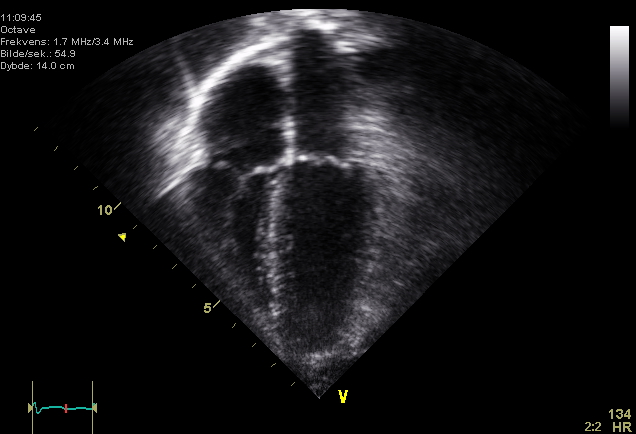
Heart failure is a clinical syndrome in which the heart cannot pump enough blood at the pressures the body needs, producing breathlessness, fatigue, and fluid retention. About 6.7 million US adults are affected and the lifetime risk after age 40 is roughly 1 in 4, driven mostly by hypertension and coronary artery disease.

Heart failure (ICD-10: I50; I50.2 systolic, I50.3 diastolic, I50.4 combined, I50.9 unspecified) is a clinical syndrome defined by symptoms (dyspnea, fatigue, fluid retention) and signs (elevated jugular venous pressure, pulmonary crackles, peripheral edema) that result from a structural or functional cardiac abnormality which raises intracardiac pressures or reduces cardiac output at rest or during stress. The universal definition adopted by ACC/AHA/HFSA and ESC in 2021 also requires objective evidence of cardiac dysfunction — abnormal echocardiogram, elevated natriuretic peptides, or hemodynamic measurements. Heart failure is staged A through D: stage A is high-risk without structural disease; stage B is structural disease without symptoms; stage C is symptomatic disease; stage D is advanced disease requiring specialized interventions. The NYHA functional class (I-IV) describes symptom severity at the time of assessment.

The key symptoms of Heart Failure are: Shortness of breath with activity that worsens steadily over days to weeks; later, breathlessness occurs at rest and limits speech in long sentences., Orthopnea — breathlessness when lying flat, relieved by sitting up or sleeping on 2-3 pillows. A specific symptom that signals elevated left-sided filling pressures., Paroxysmal nocturnal dyspnea — waking 1-3 hours after falling asleep gasping for air, relieved by sitting upright and walking to a window., Bilateral lower-extremity swelling that develops over days, pits with finger pressure, and worsens by evening. Severe cases extend to the thighs, sacrum, or abdomen., Weight gain of 1-2 kg over 3-5 days from fluid retention; a single most useful self-monitoring metric in chronic heart failure., Fatigue and exercise intolerance disproportionate to age — the patient can no longer carry groceries or climb a single flight of stairs without resting., Persistent dry or wet cough, often worse at night, sometimes producing pink frothy sputum during acute pulmonary edema..

Heart failure diagnosis is clinical, anchored by symptoms (Framingham major and minor criteria are still useful) and confirmed by objective testing. The workup begins with a focused history (effort tolerance, orthopnea, paroxysmal nocturnal dyspnea, recent weight change) and an examination for elevated jugular venous pressure, S3 gallop, displaced apical impulse, bibasilar crackles, hepatomegaly, and pitting edema. The single most useful blood test is BNP or NT-proBNP — a level below the rule-out threshold (NT-proBNP <125 pg/mL in chronic ambulatory, <300 pg/mL in acute presentation) makes heart failure unlikely; levels above the rule-in threshold support the diagnosis but are not specific. Twelve-lead ECG looks for prior MI, left ventricular hypertrophy, conduction disease, and arrhythmia; a completely normal ECG makes systolic HF less likely. The diagnostic linchpin is transthoracic echocardiogram, which yields left ventricular ejection fraction, chamber sizes, wall thickness, valvular function, and diastolic indices — and so determines whether the patient has HFrEF, HFmrEF, or HFpEF. Additional testing — coronary angiography or CT coronary angiography for suspected ischemic cause, cardiac MRI for suspected infiltrative disease, viability imaging before revascularization, right heart catheterization in selected cases — is targeted to the phenotype. Once heart failure is established, a search for the underlying cause is mandatory; reversible causes (tachycardia-mediated cardiomyopathy, alcoholic cardiomyopathy, peripartum cardiomyopathy, severe valve disease) change treatment trajectory.
Heart failure remains a high-mortality syndrome despite advances. Five-year all-cause mortality in clinically apparent HF is roughly 50% across most population studies, though stage and treatment intensity vary that figure substantially. Stage A and B carry the best outlook; stage D, defined by refractory symptoms despite optimized therapy, has 1-year mortality of 25-50% without advanced interventions. Quadruple guideline-directed medical therapy lowers 2-year all-cause mortality in HFrEF by 60-70% versus historical placebo, and STRONG-HF demonstrated that rapid up-titration within 6 weeks of an admission reduces 180-day death or readmission by 34%. HFpEF mortality is somewhat lower than HFrEF at any given age but rises sharply with comorbid burden (atrial fibrillation, CKD, diabetes). LVAD and transplantation extend median survival from 6-12 months untreated stage D to 5-10 years. Self-management — daily weights, low-sodium diet, vaccine uptake, structured exercise, early symptom reporting — and early specialty follow-up after discharge are independently associated with better outcomes.
Refer to a cardiologist or heart-failure specialist at first diagnosis, after any hospitalization for decompensation, when starting or up-titrating quadruple therapy, when LVEF is below 35%, when ICD or CRT eligibility is being considered, when the cause is unclear, or for advanced therapies (LVAD, transplant). Stage D heart failure specifically warrants referral to a dedicated advanced HF program.
Find specialists →After an acute decompensation, congestion typically resolves over 3-7 days of inpatient diuresis and oral therapy is initiated or up-titrated during the same admission. Most patients reach a new functional baseline within 4-6 weeks. With rapid quadruple-therapy titration over 6 weeks per STRONG-HF, EF improvement (in HFrEF) is often visible at 3-6 months; full myocardial reverse remodeling can continue for 12 months or more. Cardiac rehabilitation across 8-12 weeks measurably improves exercise tolerance and quality of life.
Aerobic exercise is recommended for nearly all stable HF patients. Begin with 5-10 minutes of low-intensity walking and build to 30-45 minutes of moderate-intensity aerobic exercise 3-5 times per week, supplemented by resistance training twice weekly. A formal cardiac rehabilitation program is the safest entry point and reduces HF readmission by roughly 25% per HF-ACTION subgroup data. Avoid maximal isometric exercise and prolonged Valsalva maneuvers in advanced HF.
For complex heart failure, choose a cardiologist who is board certified in cardiovascular disease and ideally fellowship trained in advanced heart failure and transplant cardiology. Look for affiliation with a heart-failure clinic offering rapid in-hospital titration (STRONG-HF protocol), device programs (ICD/CRT), and where applicable, LVAD and transplant capability. For HFpEF, expertise in evaluating diastolic function, exclusion of cardiac amyloidosis, and management of co-morbid hypertension, AF, and obesity is essential.
Medically reviewed by AIHealz Medical Editorial Board · May 12, 2026
Ranked by patient outcomes and specialized experience.
Verifying top specialists in United States.
Apply as specialist →Specialists who treat Heart Failure. Get expert guidance and personalized care.